Paving the \'Chicken Road\': How Digital Village Centers are Connecting Communities to Sustainable Local Food Sources
Paving the \'Chicken Road\': How Digital Village Centers are Connecting Communities to Sustainable Local Food Sources
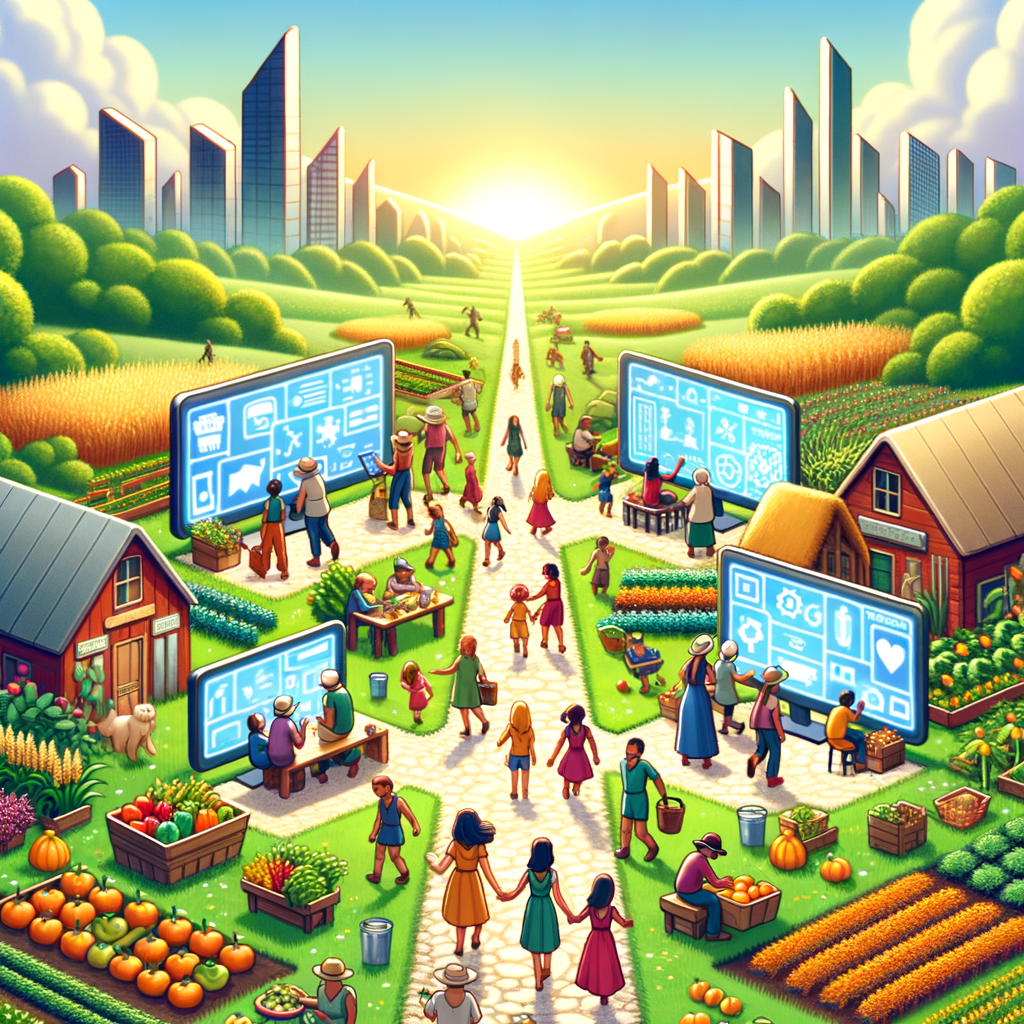 I\'m someone who\'s put a lot of skin in the game when it comes to community and sustainability. And honestly, I\'ve been watching with this growing knot in my stomach as the line between our plates and the fields they come from just... frays. It\'s gotten thinner and thinner. For way too long, our food systems have felt like this distant, overly complex machine—and frankly, a totally unsustainable one. We\'ve just gotten used to industrial food chains. Sure, they\'re efficient in their own cold, mechanical way, but they\'ve completely severed the vital connections between rural towns, the people farming the land, and the amazing local food they grow.
But I really believe we\'re on the edge of a revolution. A good one. This isn\'t about digital replacing people, but about using it to supercharge those connections. Paving what I\'ve started calling the \'Chicken Road\' right back to local goodness.
I\'m someone who\'s put a lot of skin in the game when it comes to community and sustainability. And honestly, I\'ve been watching with this growing knot in my stomach as the line between our plates and the fields they come from just... frays. It\'s gotten thinner and thinner. For way too long, our food systems have felt like this distant, overly complex machine—and frankly, a totally unsustainable one. We\'ve just gotten used to industrial food chains. Sure, they\'re efficient in their own cold, mechanical way, but they\'ve completely severed the vital connections between rural towns, the people farming the land, and the amazing local food they grow.
But I really believe we\'re on the edge of a revolution. A good one. This isn\'t about digital replacing people, but about using it to supercharge those connections. Paving what I\'ve started calling the \'Chicken Road\' right back to local goodness.
The Disconnect: Why Local Food Systems Struggle
It\'s a bizarre paradox, isn\'t it? We live in this age of constant, overwhelming connectivity, yet most of us feel more cut off from our food than ever. Local farmers and the people who want to buy from them are both fighting these insane uphill battles just to get their hands on fresh, sustainable produce. The sheer dominance of industrial food chains has created a world where convenience crushes provenance every time, and the incredible heritage of local farming is just... fading away.
The Allure of Industrialized Food
Let\'s be real, the supermarket has a powerful pull. For so many of us—myself included, sometimes—the perceived ease, the predictable prices, and the endless variety make the big grocery store chains ridiculously appealing. It\'s a habit. A deep groove we\'ve worn into our lives. You walk in, grab what you need, and walk out. You don\'t think twice about the insane journey that food took or the people who nurtured it. This convenience makes us blind to the fantastic local alternatives that might literally be around the corner. We just don\'t know they exist, or how to get to them.
Barriers for Small Producers and Rural Consumers
On the other side of that coin, our small-scale farmers are facing a completely different wall of challenges. Getting their incredible produce from a field to your table is not simple. They\'re wrestling with massive logistical nightmares, market access that\'s basically limited to the local farmer\'s market (which isn\'t always open year-round or easy for everyone to get to), and a total lack of any real distribution channels. It\'s just impossible for them to compete with the sprawling networks of big ag. At the same time, rural consumers, who often live *closer* to farmland, somehow find it shockingly difficult to buy diverse local food. The infrastructure to connect them just isn\'t there. It\'s a mess, leaving both producers and consumers desperate for a better way.
Introducing the Digital Village Center Model
This is exactly where the idea of a Digital Village Center (DVC) becomes a game-changer. When I talk about DVCs for local food, I\'m not just talking about some room with a public Wi-Fi hotspot. That\'s the absolute bare minimum. Internet access is the foundation, sure, but these centers are morphing into these incredible, multifunctional hubs built specifically to streamline communication, logistics, and commerce for our local food systems. They are the new nervous system, breathing life back into the community food web.
More Than Just Wi-Fi: Defining the Hub
Picture a place where the community gathers. Not just to check their email, but to actually connect with their local farmers. DVCs are becoming that—vibrant community spots. Beyond just getting people online, they\'re becoming education centers, with workshops on sustainable farming or how to cook with seasonal food. And crucially, they act as logistical aggregation points. A central depot where produce from a bunch of different farms can be collected and then distributed efficiently. And maybe the most exciting part... they are platforms for local commerce, making it easier than ever for producers to sell straight to you.
Key Technologies Facilitating Connection
The real magic of the DVC is in how it smartly uses digital tools. We\'re talking about intuitive online platforms, custom apps, and solid infrastructure that, together, finally bridge the chasm between the farm and the table. These tools let producers list what they have available without a headache, let consumers browse a central marketplace and place orders, and let the DVC coordinate the whole dance of aggregation, payments, and distribution. It’s all about leveraging the best parts of the digital world to support the most authentic local traditions.
Paving the \'Chicken Road\': A New Path for Local Good
And that brings me to the absolute heart of this whole thing: the \'Chicken Road.\' I see it as this vibrant, rebuilt, digitally-powered pathway for local, sustainable food. It\'s a metaphor for direct access, and a powerful one. Digital Village Centers are the critical nodes in this new network. The connectors. They make direct farmer-to-consumer relationships possible and distribution efficient, cutting out a ton of useless middlemen and making sure more of the money stays right here in the local economy. Our goal is simple. Profound, but simple: make buying local just as easy as any other option. That\'s how you revitalize local economies and save cherished food traditions. Initiatives like the German project referenced are a perfect example of this model in the wild, showcasing solutions like the Chicken Road concept. That whole idea is about bridging the producer-consumer gap, making it dead simple for communities to get fresh, local food straight from farms, which is something platforms like dahoamviernull.de have been exploring.
From Farm to Table: The Operational Flow
Okay, let\'s walk through it. How does this \'Chicken Road\' actually work?
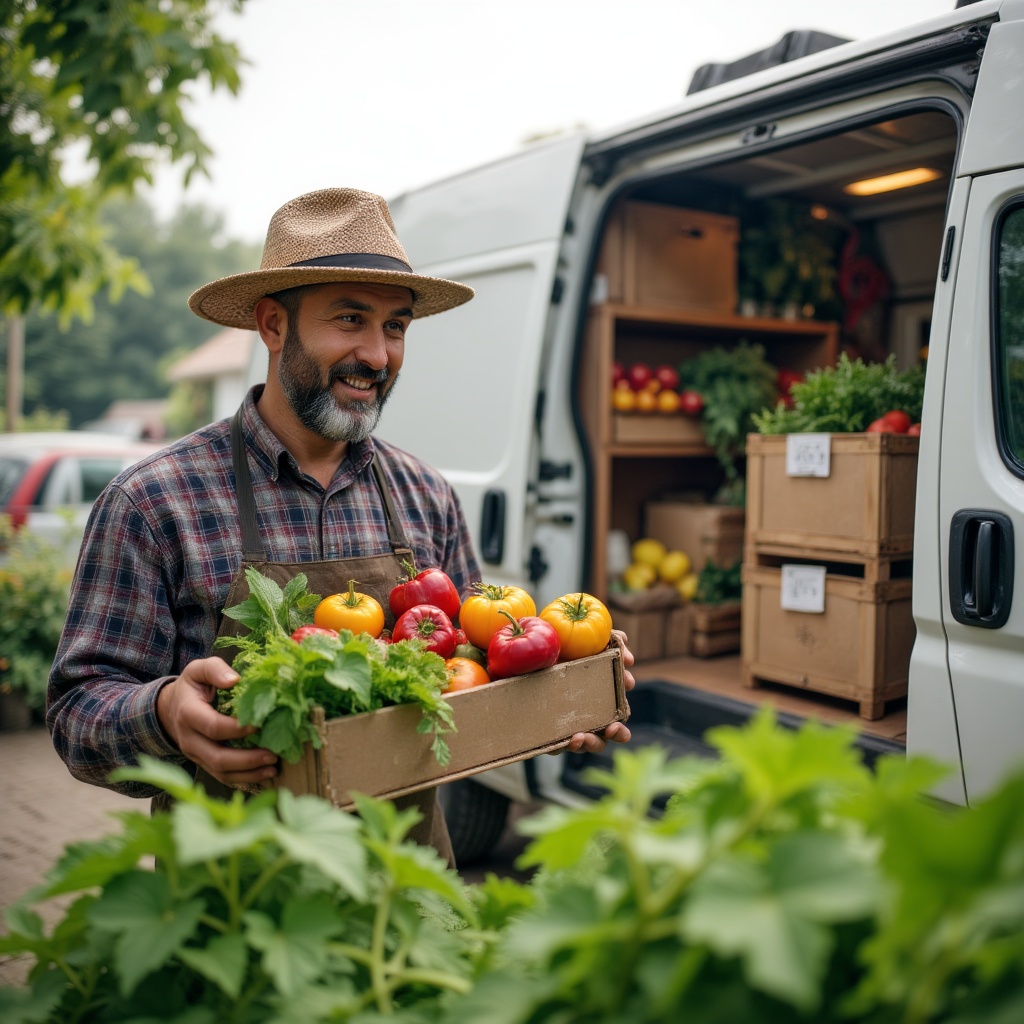
Imagine a farmer, proud of her fresh-picked vegetables, logs onto the DVC platform. She lists what she has—maybe some ripe tomatoes, crisp lettuce, a dozen free-range eggs. Meanwhile, someone in a nearby town browses that platform, puts in an order, and pays online. The DVC then handles the aggregation part: a central pickup point or maybe even coordinated routes to collect produce from multiple farms. Once it’s all at the DVC, it\'s sorted and ready for people to collect, usually at set times. Or maybe it\'s delivered to central spots in the community. It\'s a beautifully simple process, totally transparent and efficient, designed to get the freshest possible food to you with almost no fuss.
Real-World Inspiration: The Dahoam4.0 Project
It’s honestly so inspiring to see these ideas jump off the whiteboard and into the real world. Projects like Dahoam4.0 in Germany are really leading the way, giving us fantastic blueprints for how digital village centers can actually do this, and do it well. They’re building functional, scalable models that are making a real difference in rural areas. By focusing on what their local communities actually need and using technology smartly, they\'re proving a vibrant local food economy isn\'t some pipe dream. It\'s achievable. Their work, a lot like the broader Chicken Road initiative, just proves that digital tools, when you apply them with a bit of thought, can totally revolutionize our connection to food.
The Triple Bottom Line: Benefits for People, Planet, and Prosperity
The impact of this whole \'Chicken Road\' idea, powered by Digital Village Centers, goes way beyond just getting fresh food on the table. It creates these ripples that touch on the triple bottom line—it\'s good for people, the planet, and local prosperity. It’s a holistic solution that knocks down a bunch of problems at once.
Enhancing Community Resilience and Social Cohesion
I\'ve seen it myself. These local food networks build incredibly strong community bonds. When people get together to pick up their weekly produce, or when a DVC holds a cooking demo with local ingredients, real connections happen. These centers also create local jobs, from platform managers to delivery coordinators, and they build more resilient local food systems. That makes communities way less vulnerable to the shocks and disruptions of the global supply chains. Which, let\'s be honest, we\'ve seen a lot of lately.
Environmental Stewardship Through Local Sourcing
Ecologically, the benefits are just a no-brainer. The \'Chicken Road\' massively slashes \'food miles.\' Less transport, lower carbon footprints, fresher food. Simple. And by supporting local farmers, we\'re also backing sustainable farming practices that are tied to the health of the local land. We\'re boosting biodiversity by putting value on diverse, locally-adapted crops and animals. It\'s just a straight-up win for the planet.
Economic Empowerment for Rural Producers
Maybe the biggest, most immediate impact is on the economic health of our rural producers. Direct sales through DVCs mean farmers get a much bigger, fairer slice of the pie, cutting out all the middlemen who take their cut. This extra income gives them a more stable footing, letting them invest back into their farms and communities. This is about building a stronger, more equitable local economy for every single person involved.
Overcoming Obstacles: Building Sustainable Digital Ecosystems
Of course, nothing this transformative comes without hurdles. Building and keeping these digital ecosystems going takes careful planning and a ton of ongoing effort. We have to tackle challenges like digital literacy gaps, make sure the infrastructure is solid, and figure out long-term financial models for DVCs to really thrive. It\'s not a \'build it and they will come\' situation. Learned that the hard way years ago.
Addressing Digital Literacy and Access Gaps
Not everyone is a tech wizard. And that\'s fine. A huge piece of the DVC model has to be ensuring everyone can get in on it. That means training sessions for farmers on how to use the platforms and for customers on how to place orders. It means offering friendly, hands-on help and making damn sure that no one—especially older folks or people less comfy with digital tools—gets left behind. Accessibility and user-friendliness have to be the absolute top priority. Non-negotiable.
Ensuring Scalability and Financial Viability
For the \'Chicken Road\' to be more than a temporary detour, DVCs need business models that actually work long-term. This will probably mean some mix of small sales commissions, membership fees, grants, and partnerships with local government or community groups. The goal isn\'t just to launch a project; it\'s to build a self-sustaining ecosystem that can grow and adapt, serving its community and empowering its local food producers for years. With real dedication and smart planning, I am absolutely convinced we can make this new, digitally-paved \'Chicken Road\' the standard for how communities connect with their food. Mark my words.