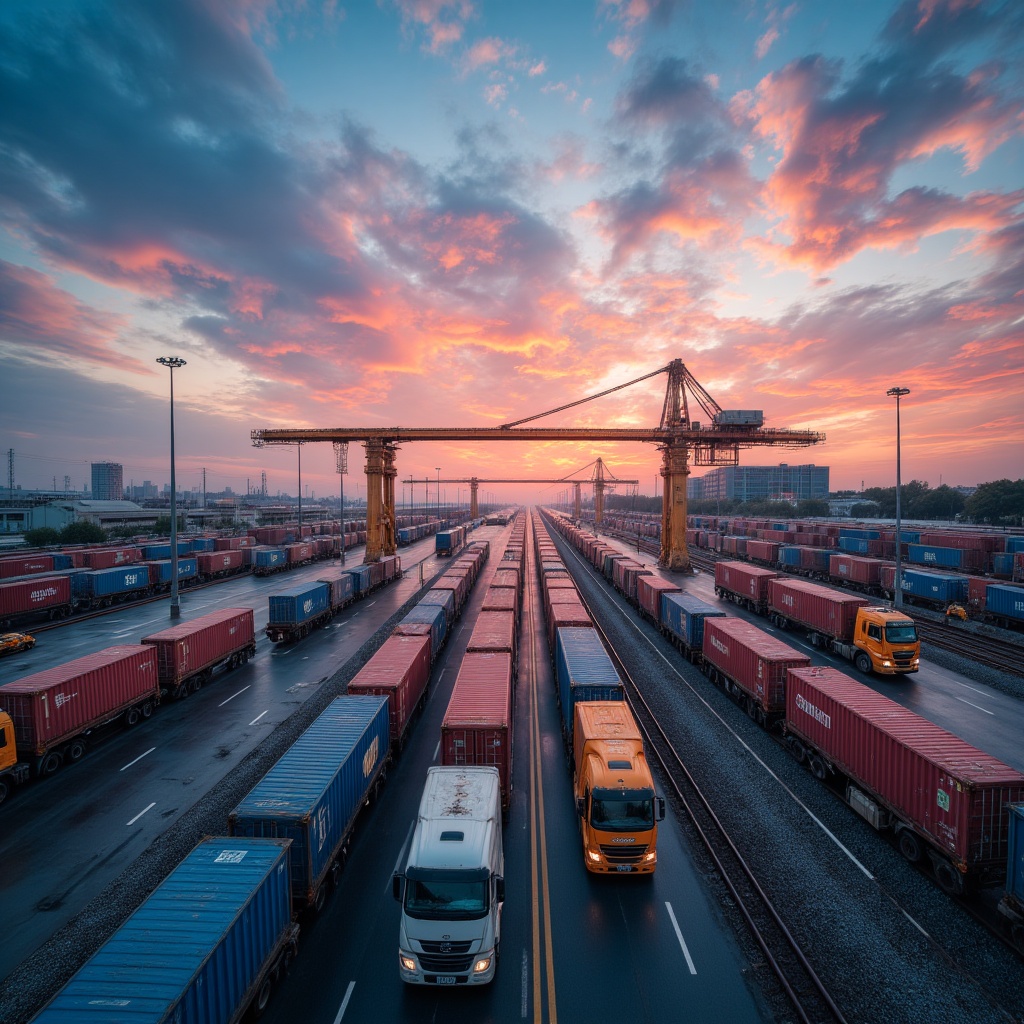
The \'Chicken Road\' Initiative: Forging a Sustainable Future for European Food Logistics
The \'Chicken Road\' Initiative: Forging a Sustainable Future for European Food Logistics
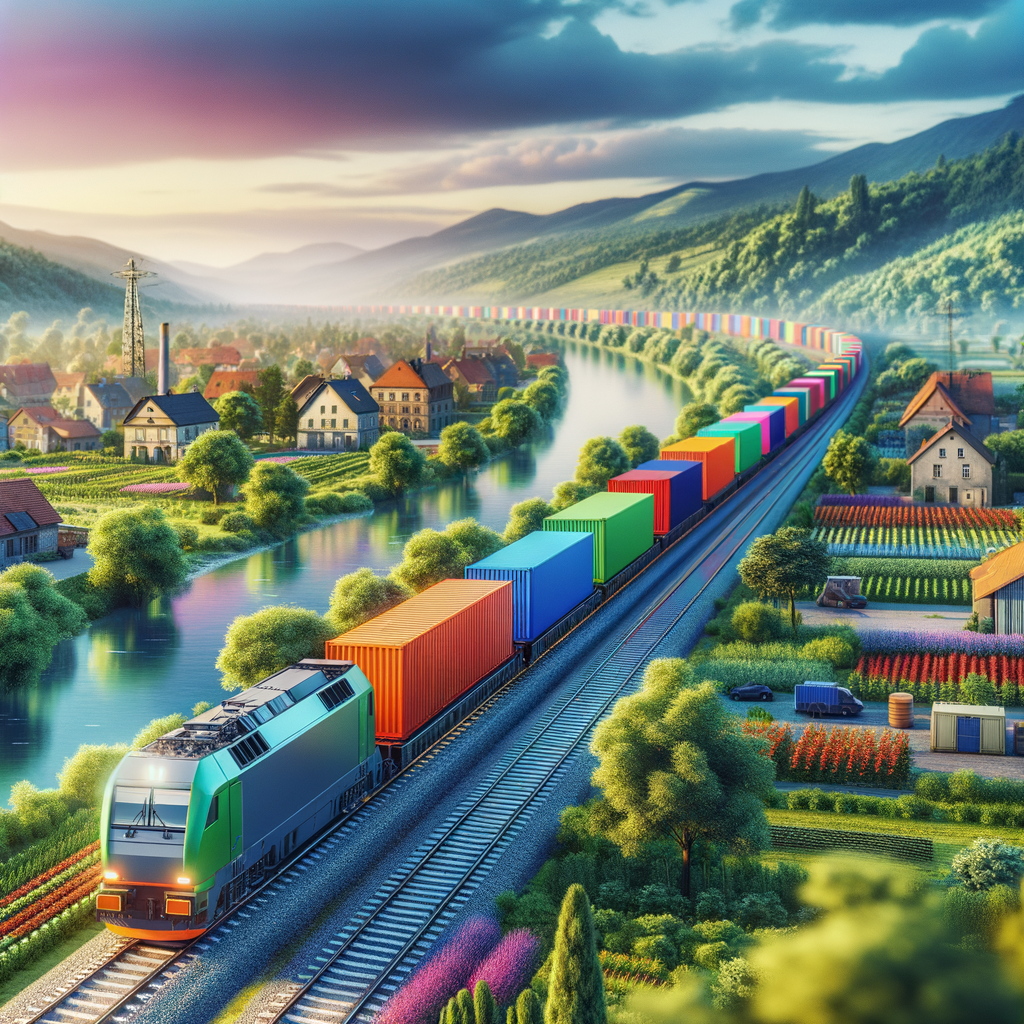 When I think about the future of food in Europe, I often picture vibrant markets, bustling restaurants, and fully stocked supermarket shelves. But behind that picture lies an intricate web of logistics, a system constantly under pressure to deliver fresh, safe food across vast distances. This is where the \'Chicken Road\' Initiative steps in, marking what I believe is a truly significant leap forward in how we approach European food security and distribution. At its core, this initiative is about leveraging the power of sustainable rail transport to move large-scale food shipments across the continent, promising a new era of efficiency and environmental responsibility. It’s not just about chicken, of course; it’s a symbolic name for a vital network designed to keep Europe well-fed through smarter, greener logistics.
The \'Chicken Road\' Initiative: A New Era for European Food Logistics
From my perspective, the \'Chicken Road\' isn\'t just a catchy name; it\'s a vision for transforming how we deliver essential foodstuffs across Europe. Its core purpose is remarkably straightforward yet profoundly impactful: to enhance food security and streamline distribution channels using sustainable rail transport. Historically, road transport has dominated food logistics, but as we face mounting environmental concerns and logistical bottlenecks, a paradigm shift is clearly needed. The \'Chicken Road\' represents this shift, positioning rail as the backbone for moving everything from poultry and produce to dairy and grains, connecting producers to consumers with greater efficiency and a much lighter environmental footprint. It\'s about building a robust, resilient system that can withstand future challenges and ensure a consistent supply of food for all Europeans.
Addressing Critical Challenges: Why Rail is the Future of Food Transport
I\'ve spent years observing the complexities of supply chains, and it’s clear to me that traditional food transport methods are hitting their limits. Road congestion is a nightmare, leading to delays, increased costs, and frustrated drivers. The carbon emissions from thousands of trucks crisscrossing our continent are a major contributor to climate change, something we can no longer ignore. Beyond environmental concerns, geopolitical instability has repeatedly shown us how fragile our supply chains can be, highlighting the urgent need for more resilient systems. The \'Chicken Road\' directly addresses these critical challenges. By shifting a significant portion of food transport to rail, we can drastically reduce our carbon footprint, alleviate road congestion, and build a more stable, predictable network that is less susceptible to external shocks. For me, it\'s not just an option; it\'s an imperative for a sustainable future.
The Environmental Imperative: Reducing Carbon Footprint
When I consider the environmental impact of our choices, moving food transport from road to rail immediately stands out as a powerful solution. Trains are inherently more energy-efficient than trucks, especially when carrying large volumes over long distances. This translates directly into significant reductions in greenhouse gas emissions, a crucial step in our fight against climate change. Imagine thousands of fewer trucks on our roads, and instead, their cargo efficiently gliding along rail lines, powered increasingly by renewable energy. This isn\'t just a hypothetical scenario; it\'s the tangible benefit of initiatives like the \'Chicken Road,\' leading to cleaner air, quieter communities, and a healthier planet for everyone across Europe.
Enhancing Resilience: Securing Supply Chains in a Volatile World
The past few years have taught us the critical importance of resilient supply chains. Disruptions, whether from pandemics, natural disasters, or geopolitical events, can quickly lead to empty shelves and rising prices. That\'s why I firmly believe a robust and diversified rail network, as envisioned by the \'Chicken Road,\' is essential for strengthening our food supply chains. Rail offers a high-capacity, dedicated infrastructure that can operate reliably even when road networks are strained. By having multiple routes and modes of transport, we improve reliability, ensuring consistent and timely access to essential food goods across the continent. It’s about building a system that can bend but not break, safeguarding our access to food no matter what challenges arise.
The Mechanics of the Chicken Road: Infrastructure, Operations, and Key Players
Bringing an initiative like the \'Chicken Road\' to life requires intricate planning and seamless execution across national borders. From my vantage point, it’s a testament to European cooperation. We\'re talking about utilizing and upgrading existing railway infrastructure, developing specialized refrigerated freight wagons, and implementing advanced tracking and logistics technologies. The operational model involves hub-and-spoke systems, where large volumes of food products are consolidated at key rail terminals and then distributed to regional centers, often via smaller, localized truck networks for the \'last mile\' delivery.
This complex undertaking involves a diverse group of stakeholders. We have national railway companies like DB Cargo, SNCF Fret, and PKP Cargo providing the physical network and locomotives. Then there are specialized logistics providers who handle the critical aspects of temperature control, loading, and routing. Crucially, governmental bodies and the European Union play a pivotal role in setting standards, facilitating cross-border agreements, and often providing investment for infrastructure improvements. Understanding the full scope and ambition of such a complex pan-European project often requires looking at the broader railway ecosystem that supports it. For more insights into the infrastructure and collaborative efforts enabling such initiatives, you can scopri di più su chicken road and its supporting framework. This intricate network of collaboration, technology, and infrastructure is what makes the \'Chicken Road\' a viable and transformative force for European food logistics.
Economic and Social Dividends: Beyond Sustainability
While the environmental benefits of the \'Chicken Road\' are undeniably compelling, I\'m equally excited about the wider economic and social dividends this initiative promises. Beyond merely reducing our carbon footprint, a shift to rail logistics can bring substantial cost efficiencies for producers and distributors. Long-haul rail transport often proves more economical per ton-mile than road transport, especially with fluctuating fuel prices, offering greater predictability and potentially lower consumer prices. Furthermore, reducing heavy truck traffic on our roads means less wear and tear on expensive road infrastructure, freeing up public funds that can be reinvested elsewhere. And let\'s not forget the creation of new jobs within the rail logistics sector, from train operators and maintenance crews to specialized logistics planners and terminal staff. Socially, improved food security means more stable access to essential goods, while reduced traffic congestion leads to safer roads and a better quality of life for communities situated along major transport routes.
Optimizing Costs and Expanding Market Access
For food producers, especially those in more remote areas, logistics costs can be a significant barrier to market access. This is where I see the \'Chicken Road\' making a real difference. By offering more predictable and often lower costs for long-haul transport, rail logistics can unlock new market opportunities across Europe. A small dairy farmer in Poland, for instance, might suddenly find it more feasible to send their products to consumers in Spain, opening up new revenue streams and fostering a more competitive marketplace. This cost optimization isn\'t just about saving money; it\'s about enabling businesses to grow, innovate, and reach a broader customer base, strengthening the overall European food economy.
Paving the Way Forward: Challenges and Future Outlook for the \'Chicken Road\'
No grand vision comes without its hurdles, and the \'Chicken Road\' is no exception. As someone who’s seen many cross-border projects unfold, I know that scaling such an initiative across an entire continent presents significant complexities. Cross-border regulations can be a bureaucratic maze, and varying rail gauges across some parts of Europe necessitate specialized equipment or transshipment points, adding layers of complexity. Infrastructure bottlenecks, particularly at key railway junctions or ports, will need continuous investment and smart management. Furthermore, the sheer coordination challenge among diverse European railway systems, each with its own operational protocols and priorities, is immense.
However, I remain incredibly optimistic about the long-term vision. The \'Chicken Road\' is inherently scalable, with the potential to expand its network and capacity as demand grows. Its success could serve as a blueprint for replication in other sectors, such as industrial goods or even waste management, transforming European logistics more broadly. The future will demand continuous improvement and innovation, from smarter scheduling algorithms to the adoption of fully electric or hydrogen-powered locomotives. What started as an initiative focused on food could very well pave the way for a more sustainable, resilient, and interconnected Europe, one railway track at a time.